
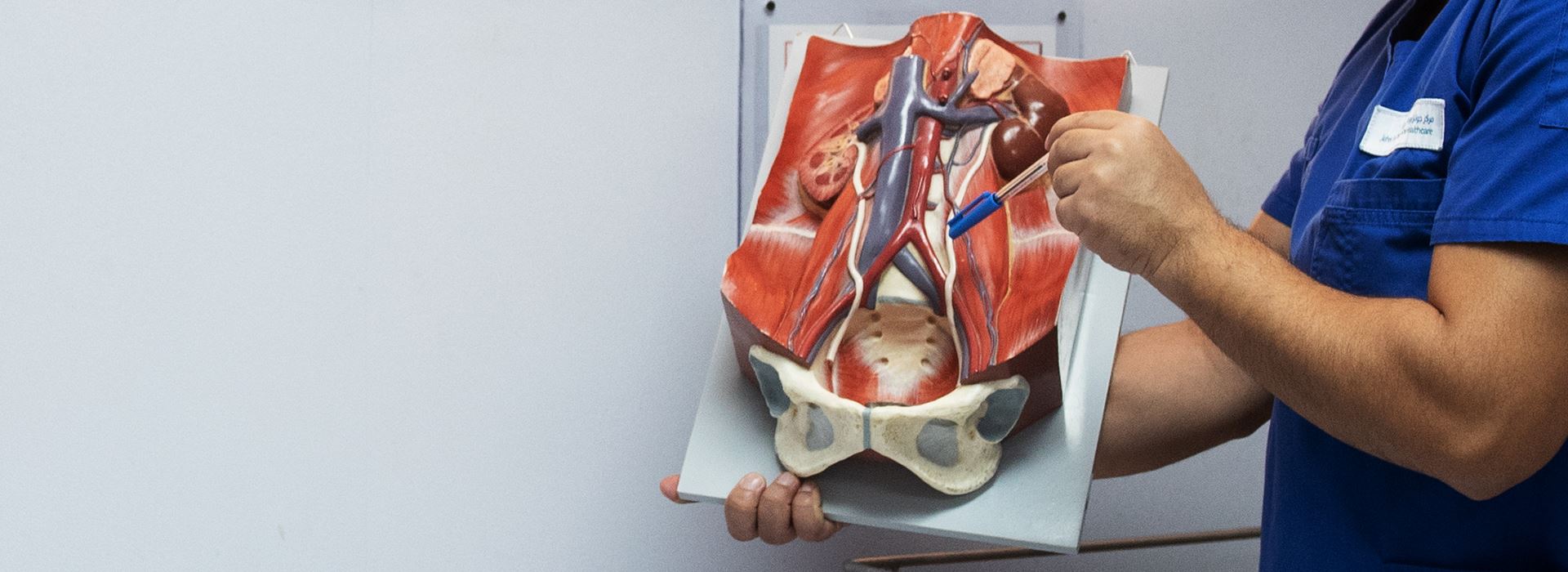
Nephrology
What is nephrology?
We are passionately committed to helping people with kidney problems lead fuller and more active lives. Our nephrologists work closely with endocrinologists, cardiologists, pharmacists, nurses, dietiticans and health educators, to provide quality care for those of you who have been diagnosed with chronic kidney disease (CKD) and other kidney problems.
Nephrology treatments, services and procedures

Care of patients with CKD
Early diagnosis and regular monitoring of CKD can help you keep your kidneys functioning for as long as possible – and allow you and your doctor to plan for end-stage renal disease (ESRD) treatment when necessary. You will receive treatment and dietary advice aimed at maintaining kidney function and slowing the progression to more advanced stages of CKD and ESRD. We will discuss in-center hemodialysis, at-home peritoneal dialysis, kidney transplants and supportive or palliative care.

Hemodialysis
When kidneys fail, your body may have problems filtering your blood and remaining chemically balanced. Dialysis cleans the body of unwanted toxins, waste products and excess fluids, and can take the place of some kidney function. Our modern dialysis unit with its state-of-the-art dialysis equipment provides treatment and support six days a week from 6 a.m. until 11 p.m.


Peritoneal dialysis
Peritoneal dialysis (PD) is used to remove excess fluid, correct electrolyte problems, and remove toxins in people with kidney failure. PD has the benefits of greater flexibility and tolerance in those with significant heart disease. It introduces a solution through a permanent tube in the lower abdomen, either at regular intervals throughout the day, or at night with the assistance of a machine. As part of our home training program, you and members of your family will receive training on what peritoneal dialysis involves and how to use the equipment safely at home.

Kidney stones
Kidney stones are hard deposits of minerals and salts that form inside your kidneys and affect your kidneys or bladder. Passing kidney stones can be painful, but the stones usually cause no permanent damage if they are recognized and treated quickly. Treatment may require taking pain medication and drinking plenty of water to pass a kidney stone. However, if stones are lodged in the urinary tract, or are causing a urinary infection or other complications, surgery may be needed.

Kidney transplant care
While we do not perform kidney transplant surgery at JHAH, our nephrologists are experts in all aspects of kidney transplantation, from pre-transplantation preparation to post-transplantation follow-ups. If you need a kidney transplant, you will be referred to a transplant center within the Kingdom, before returning to JHAH for post-transplantation care.

Management of secondary hypertension
Secondary hypertension is high blood pressure caused by hormonal abnormalities, kidney failure or narrowing of the kidney arteries. It can affect your kidneys, arteries, heart or brain. It can be caused by other medical conditions, including obesity and pregnancy. Proper treatment can control both the underlying condition and the high blood pressure, reducing the risk of serious complications such as heart disease, kidney failure and strokes.

Nutritional counseling
Clinical dieticians are involved with outpatient nutrition counseling and care for the nutritional needs of people in our hospitals. If you are under the care of JHAH nephrologists, you can be referred to clinical dieticians for nutritional counseling.
What to expect from our kidney services
When arranging an appointment, we will ensure that you see one of our expert consultants. Our experienced care team will support you every step of the way – from providing advice at your first consultation to offering ongoing care after your treatment.
Our Nephrology Clinic is not a self-referral service. Your Primary Care physician will make a referral if they believe you need a specialist to evaluate your kidney condition.
You will usually be invited to the clinic two to four weeks after your referral from Primary Care.
Nephrology Clinic visit
When you arrive at the Nephrology Clinic, you will be checked in. Within five minutes, a nurse will carry out an initial clinical screening. Typical wait times are around 15 to 20 minutes, and your appointment will usually last 20 to 30 minutes.
Depending on your condition, you may need further imaging procedures and/or laboratory tests. All required procedures and follow-up appointments can be arranged by the nephrology team at the front desk. If additional diagnostic or interventional procedures are needed, our nursing staff will explain how to prepare and answer any questions about your next steps.
Your nephrology physicians

Nephrology Consultant and Chief of Office of Academic Affairs
Dr. Abdulrazack Amir
Nephrology
Languages: English, Arabic, Urdu


Internal Medicine and Nephrology Consultant
Dr. Ahmed Al Khunaizi
Nephrology
Languages: English, Arabic, German
Consultant in Internal Medicine, Solid Organ Transplantation and Nephrology
Dr. Ali H. AlShaqaq
Internal Medicine, Nephrology
Languages: English, Arabic
Nephrology Physician
Dr. Muhammad Saeed
Nephrology
Languages: English, Urdu

Internal Medicine and Nephrology Consultant
Dr. Usman Afzal
Hospital Medicine, Nephrology
Languages: English, Punjabi, Urdu